
Mitolyn is a “weight loss support” supplement featuring a “proprietary formula” with natural ingredients, plant extracts, and nutrients.
The name “Mito”lyn comes from the idea that the supplement targets mitochondria, or the powerhouses of your cells. The mitochondria turn the food you eat into energy you can use, which is why they play a critical role in weight loss, calorie expenditure, and metabolism.
Features
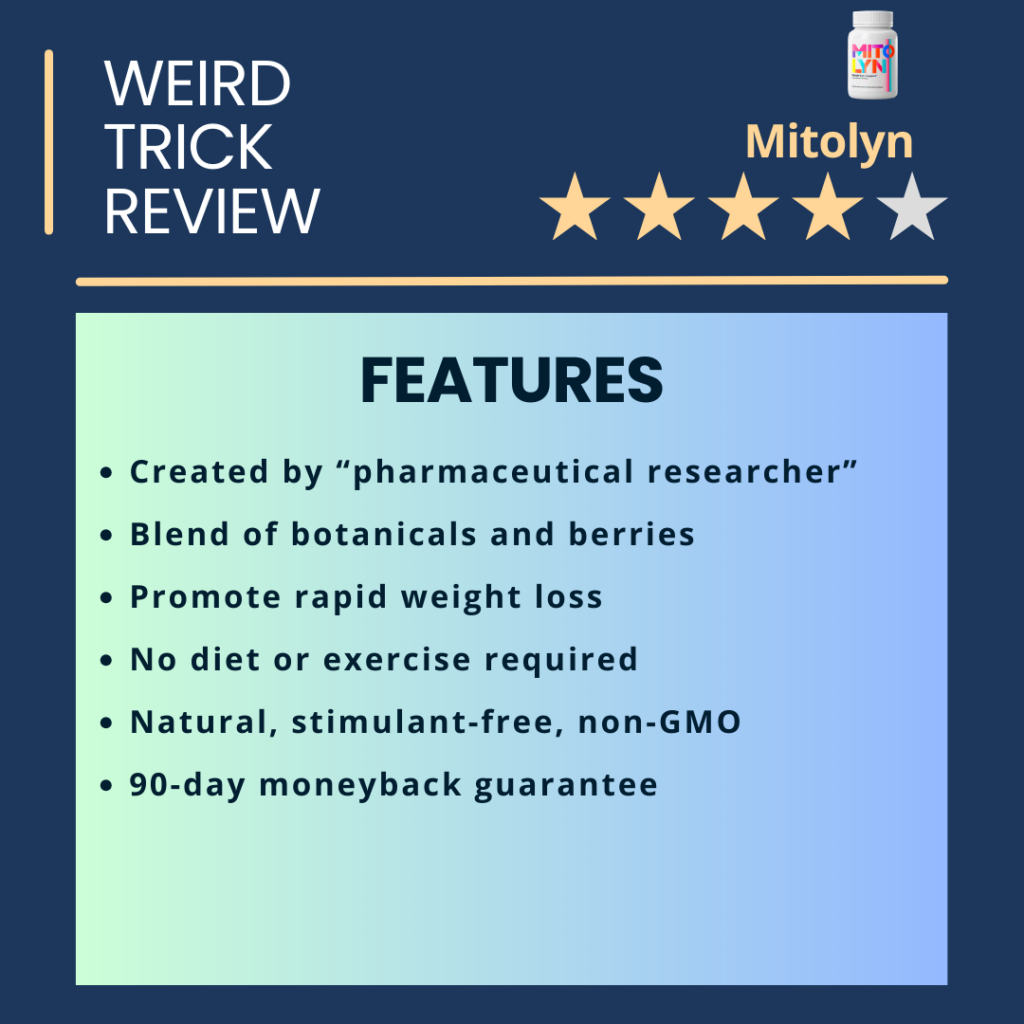
Like other weight loss supplements sold via Clickbank, Mitolyn claims to help you lose weight without diet or exercise. In fact, it appears anyone can rapidly lose weight just by incorporating Mitolyn into their daily routine.
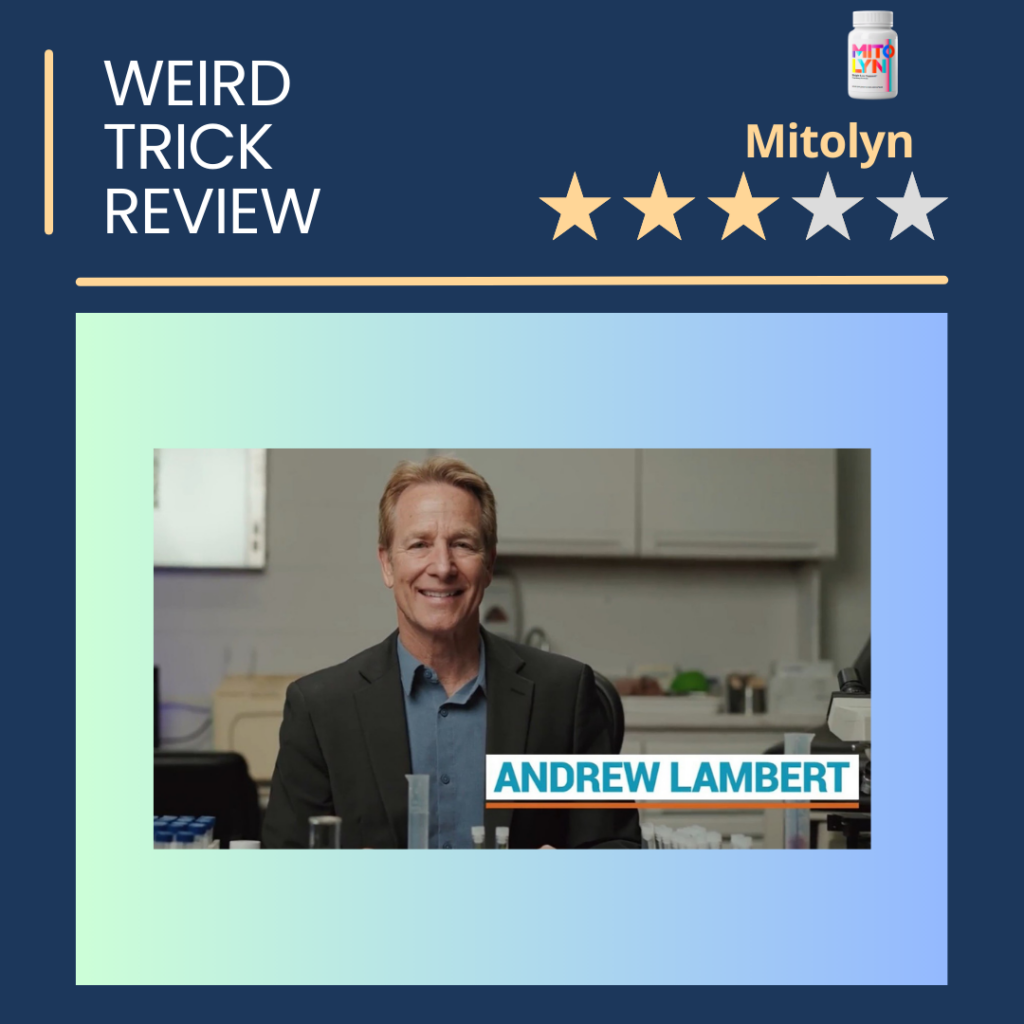
Mitolyn was created by a man claiming to be a pharmaceutical researcher. As with other supplements, there’s no evidence this man has any genuine experience. He’s an actor using a pseudonym to peddle weight loss supplements online.
Ingredients
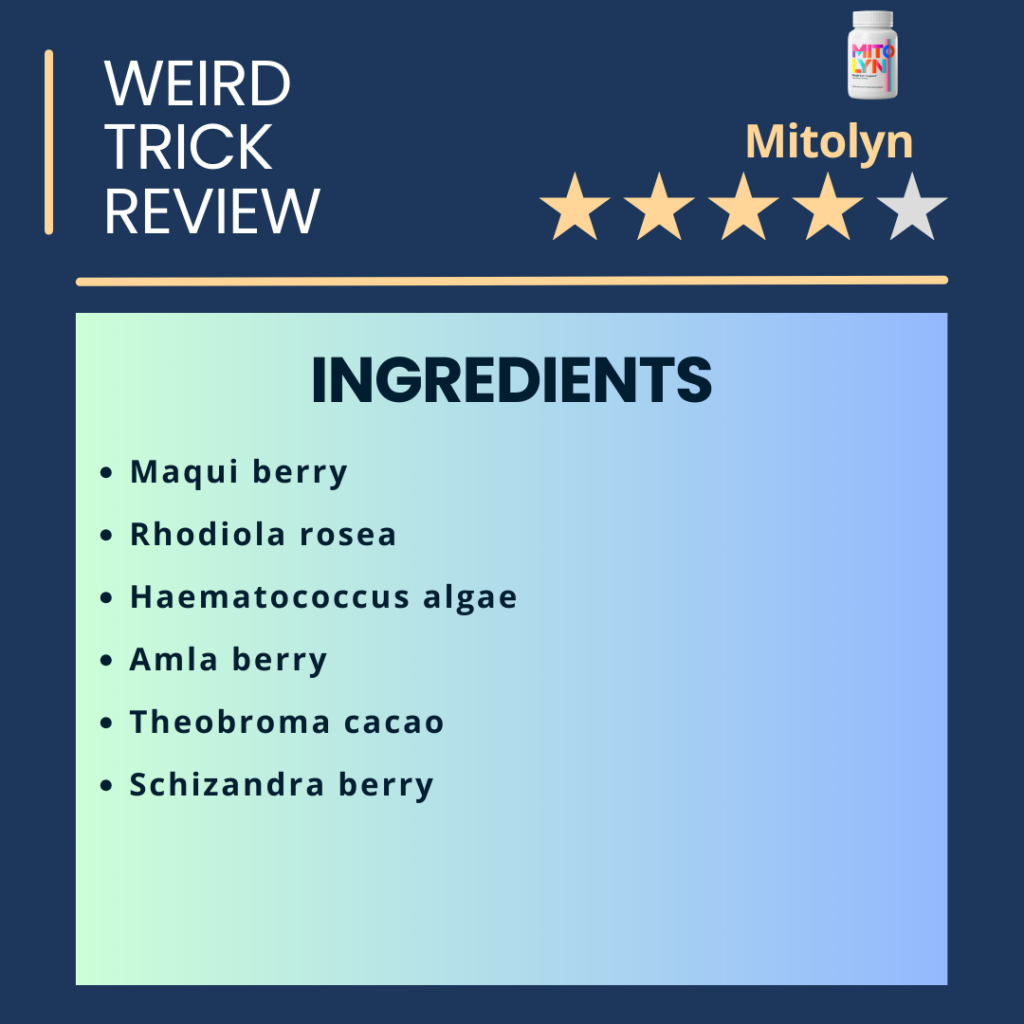
Awkward marketing aside, Mitolyn does feature a blend of natural ingredients linked to weight loss and other effects.
The formula contains maqui berry, for example, along with amla berry, schizandra berry, and Rhodiola rosea.
None of these ingredients have been shown to promote significant weight loss without diet or exercise. However, they could support healthy inflammation, help the body manage stress (via adaptogenic effects), and promote overall weight loss when combined with an active diet and exercise program.
Here’s what science says about the ingredients in Mitolyn:
Maqui Berry: Maqui berry, formally known as Aristotelia chilensis, could reduce body weight gain, support insulin sensitivty, and help turn your white fat into brown fat to boost energy expenditure, according to some studies on animals. A 2019 trial in Antioxidants, for example, found maqui berry led to significant “browning” of white fat in a group of obese mice.
Rhodiola Rosea: Rhodiola rosea is a root extract taken for calmness and for weight management. Some early studies suggest Rhodiola rosea could reduce binge eating behavior or help with adipocyte differentiation – both of which could impact body weight management. However, studies are limited and more research is needed to verify these results.
Haematoccocus Algae: Haematococcus pluvialis is a type of algae known for its antioxidant effects. The algae is packed with astaxanthin, one of nature’s best antioxidants. Astaxanthin has been studied for its effects on inflammation and oxidation overall, although direct weight loss evidence in humans is limited. Nevertheless, people with high levels of inflammation tend to struggle to lose weight.
Amla Berry: Amla berry, or Emblica officinalis, has been shown to help with body weight and lipid profiles in animals, although studies on humans are limited. In a 2008 study, for example, researchers in China found amla berry helped with body weight in a group of obese, depressed rats.
Theobroma Cacao: Theobroma cacao was found to enhance metabolic rates in a group of overweight subjects (obese rats) in a 2024 trial published in Food & Nutrition Research. Researchers found a proprietary combination of cacao and citrus fruit rind extract (called LN19183) helped to reduce body weight gain even when rats were fed a high fat diet.
Schizandra Berry: The final ingredient in MitoLyn, schizandra berry, is historically used for its adaptogenic properties. Some studies suggest it helps with lipid metabolism, although there’s little direct evidence connecting it to weight loss in humans. Formally known as Schisandra chinensis, schizandra berry was found to exhibit anti-obesity effects and other therapeutic properties in a 2019 analysis published in Nutrients.
The Tricks
Even for weight loss supplements, Mitolyn takes the “tricks” a little far.
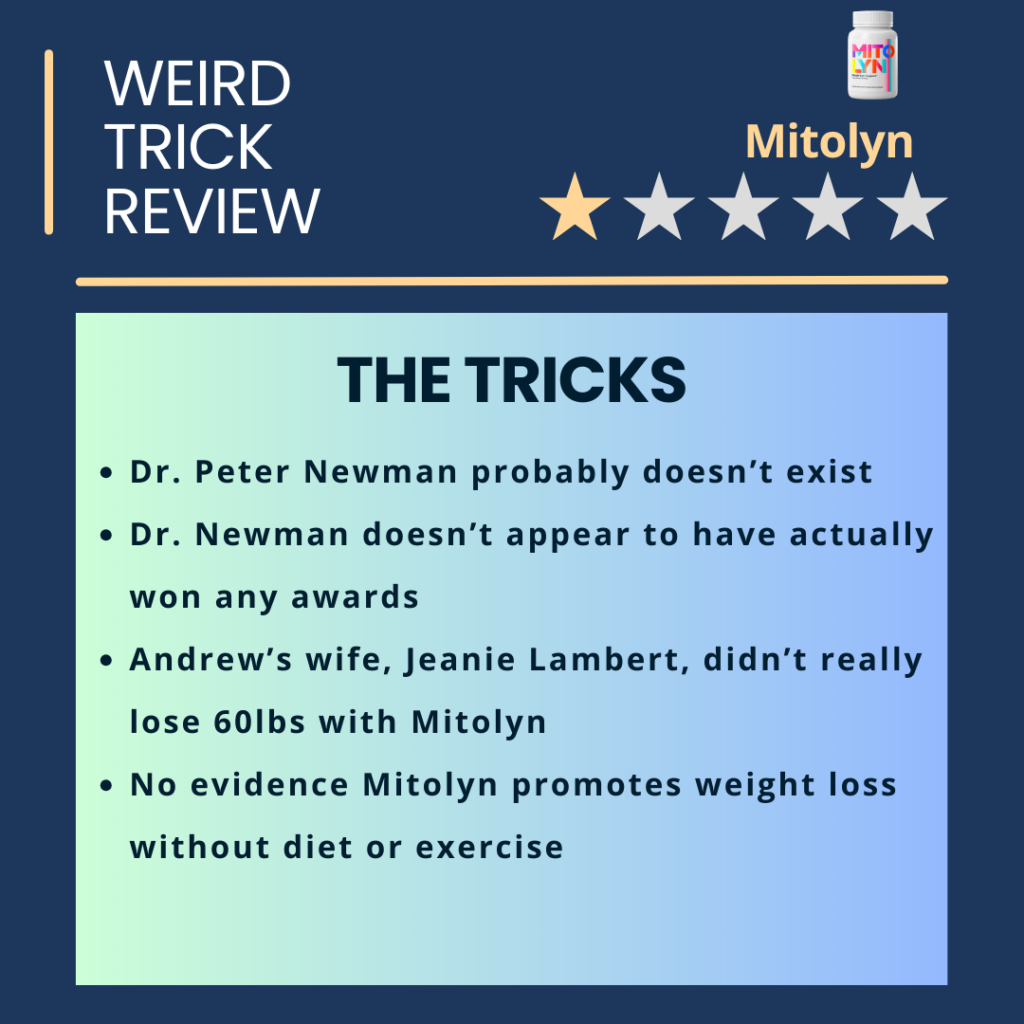
The official website prominently features the story of a woman named Jeanie Lambert, for example, who claims to have lost 60lbs with Mitolyn with virtually zero effort: she simply started taking the magical ingredients in Mitolyn daily.
The official website even goes as far as to suggest a doctor was involved in the creation of Mitolyn. You’ll hear the story of a man named Dr. Peter Newman, for example, who claims to have won awards. There’s no evidence Dr. Newman exists or is an award-winning weight loss researcher.
The biggest “trick” with Mitolyn, however, is the fact that it claims to offer effortless weight loss with zero diet or exercise required.
Pricing
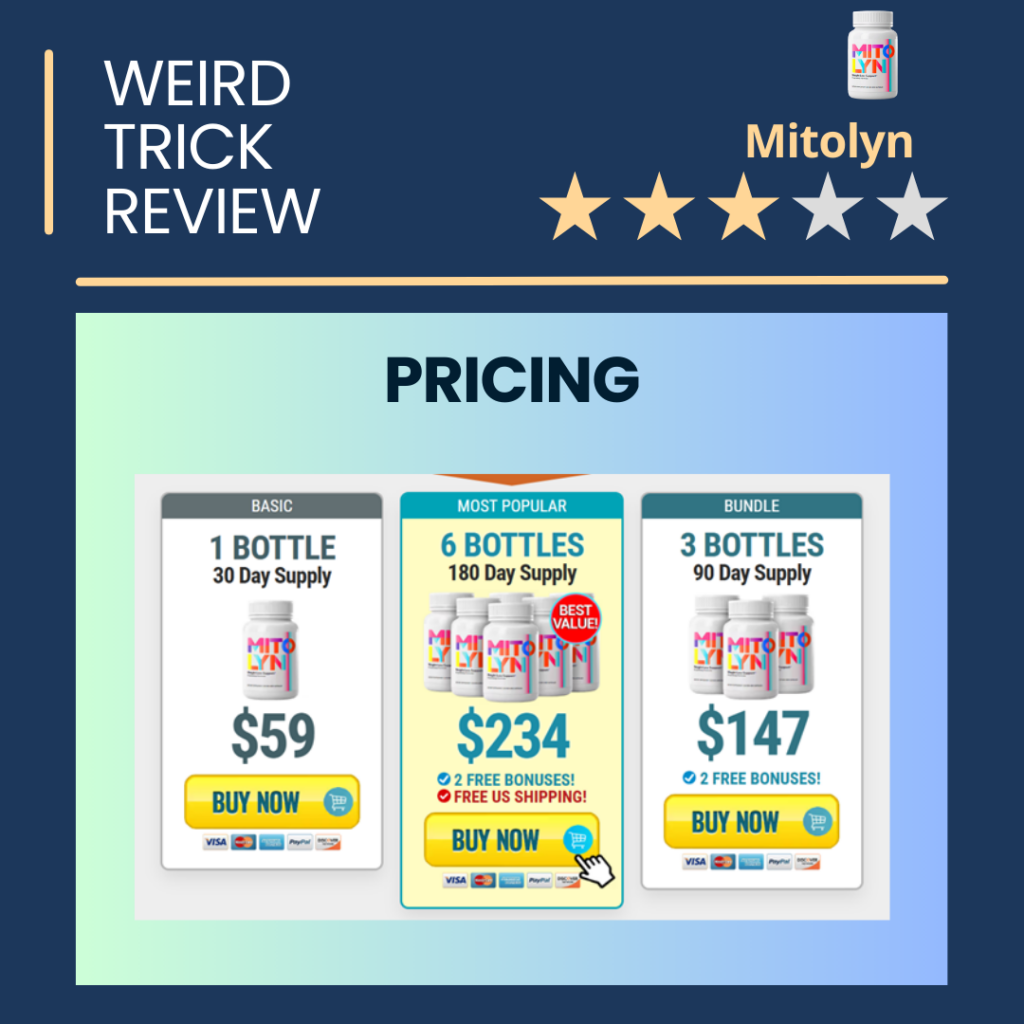
The only area where Mitolyn doesn’t appear to trick users is with its pricing. The supplement is priced at $39 to $59 per bottle and always has been. The makers of Mitolyn don’t claim it was ever priced at $100 to $200 per bottle, which is refreshing compared to other over-hyped weight loss products.
Mitolyn: Overall Ratings
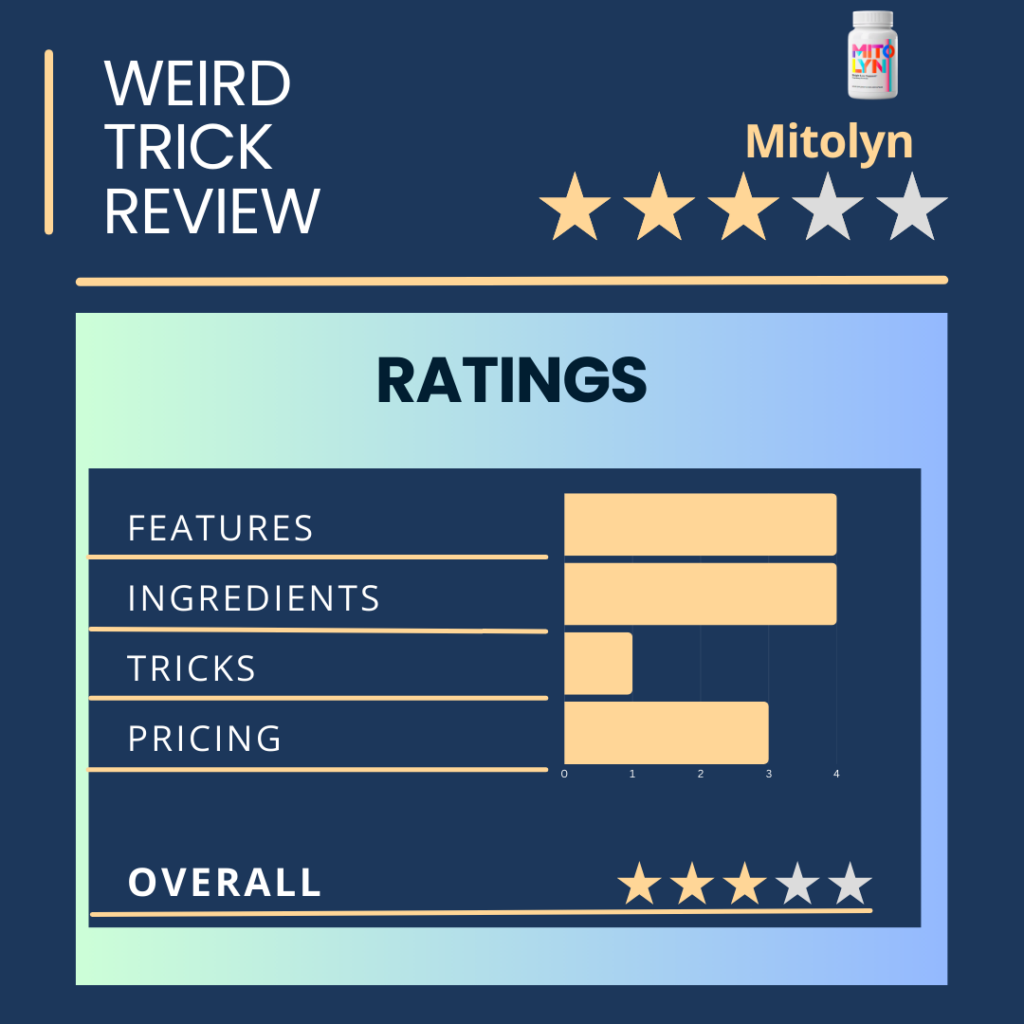
Overall, Mitolyn masks a decent weight loss support supplement behind a weird marketing campaign involving fake doctors. There are genuine, science-backed ingredients in Mitolyn that could help you lose weight (when combined with diet or exercise).
References
Nowak, A., Zakłos-Szyda, M., Błasiak, J., Nowak, A., & Zhang, Z. (2019).
Potential of Schisandra chinensis (Turcz.) Baill. in human health and nutrition: A review of current knowledge and therapeutic perspectives. Nutrients, 11(2), 333. https://doi.org/10.3390/nu11020333
Huang, Y., Wang, Y., Wang, X., & Xu, Y. (2008).
Anti-fatigue effects of Schisandra chinensis polysaccharide in mice. International Journal of Biological Macromolecules, 42(3), 167–170. https://doi.org/10.1016/j.ijbiomac.2007.10.003
Kim, H. G., Cho, J. H., Yoo, S. R., Lee, J. S., Han, J. M., Lee, N. H., & Son, C. G. (2013).
The effects of Schisandra chinensis extract on the hypothalamic-pituitary-adrenal axis in immobilized rats. Journal of Ethnopharmacology, 145(3), 850–856. https://doi.org/10.1016/j.jep.2012.12.033
Szopa, A., Ekiert, H., & Ekiert, M. (2017).
Current knowledge of Schisandra chinensis (Turcz.) Baill. (Chinese magnolia vine) as a medicinal plant species: A review on the bioactive components, pharmacological properties, analytical and biotechnological studies. Phytochemistry Reviews, 16(2), 195–218. https://doi.org/10.1007/s11101-016-9470-4
Leave a Reply