
Ah, pineal supplements. A bizarre corner of the supplement industry where spirituality blends with science to create some of the most unusual products on the market.
Fortunately, Pineal Guardian avoids many of the tropes of other pineal supplements.
Pineal Guardian doesn’t claim to “alter your connection with the universe”, for example, or help you “get rich quick.”
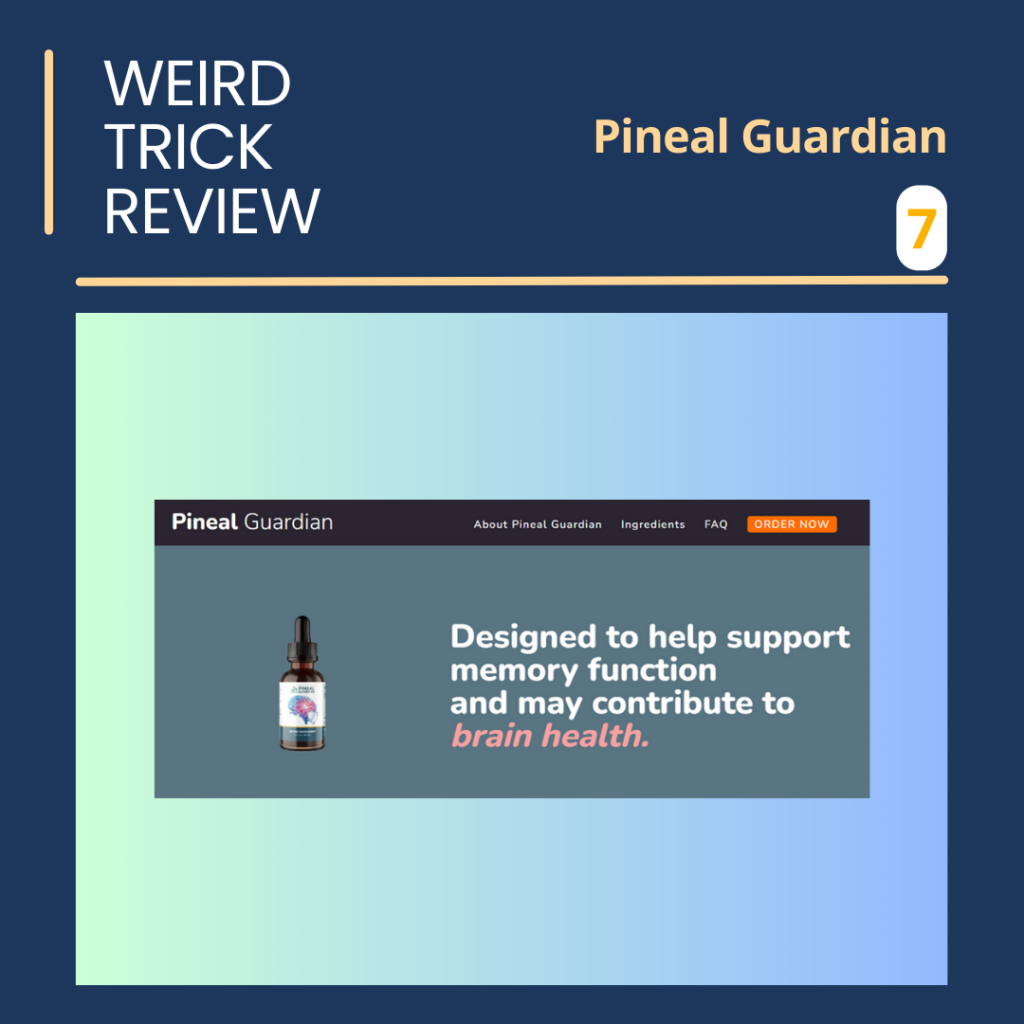
Instead, Pineal Guardian simply claims to support memory and cognition while also targeting the pineal gland.
Features
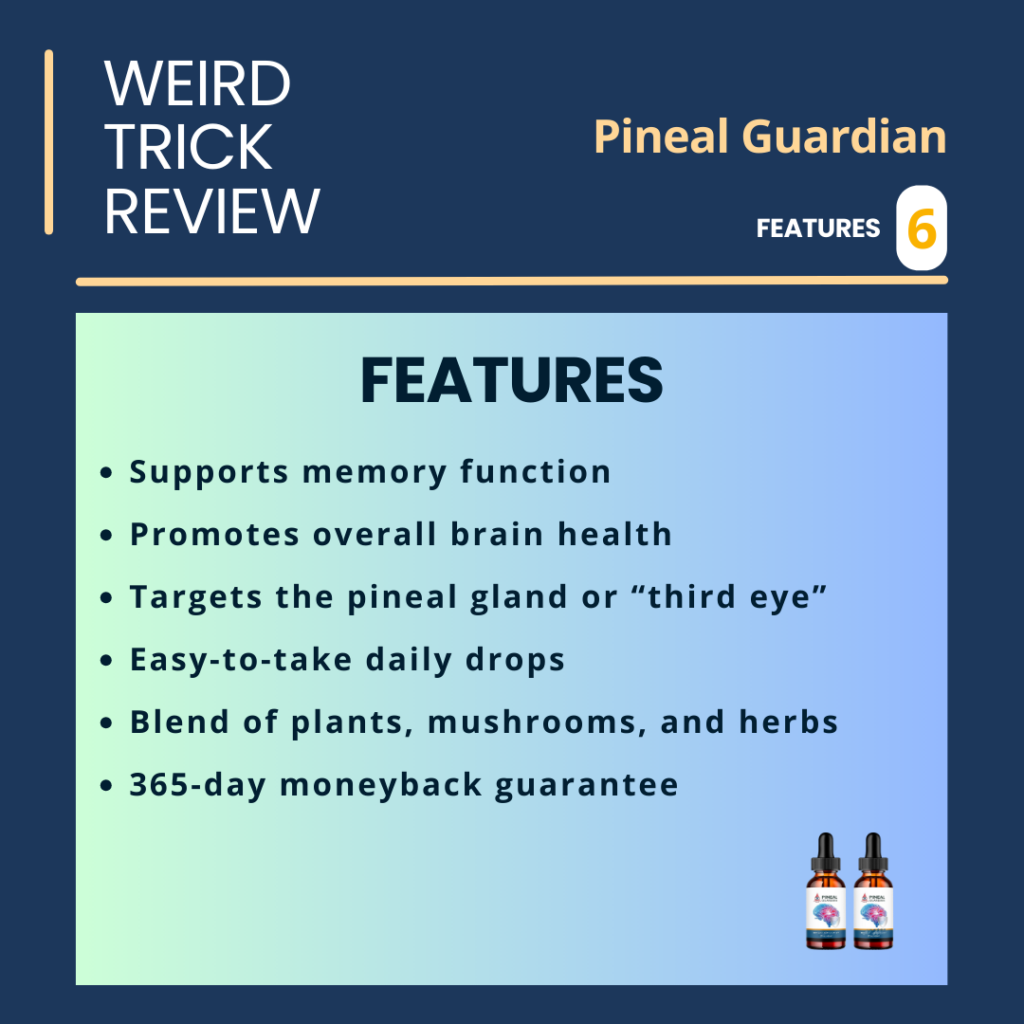
Also known as the third eye, the pineal gland is a small gland within the brain that, according to some spiritual practices, maintains your connection with the spiritual world.
There’s little formal evidence any supplement can “support” the pineal gland or impact the function of the pineal gland in a reliable way.
Nevertheless, some supplement companies claim to have developed products that target the pineal gland to promote brain function.
Conveniently, Pineal Guardian promotes the same features as other nootropic supplements. It uses a blend of mushrooms and botanicals to promote brain function. You might feel a change in focus, memory, and cognition after taking it. That’s because the ingredients could support brain function without necessarily targeting the third eye itself.
Ingredients
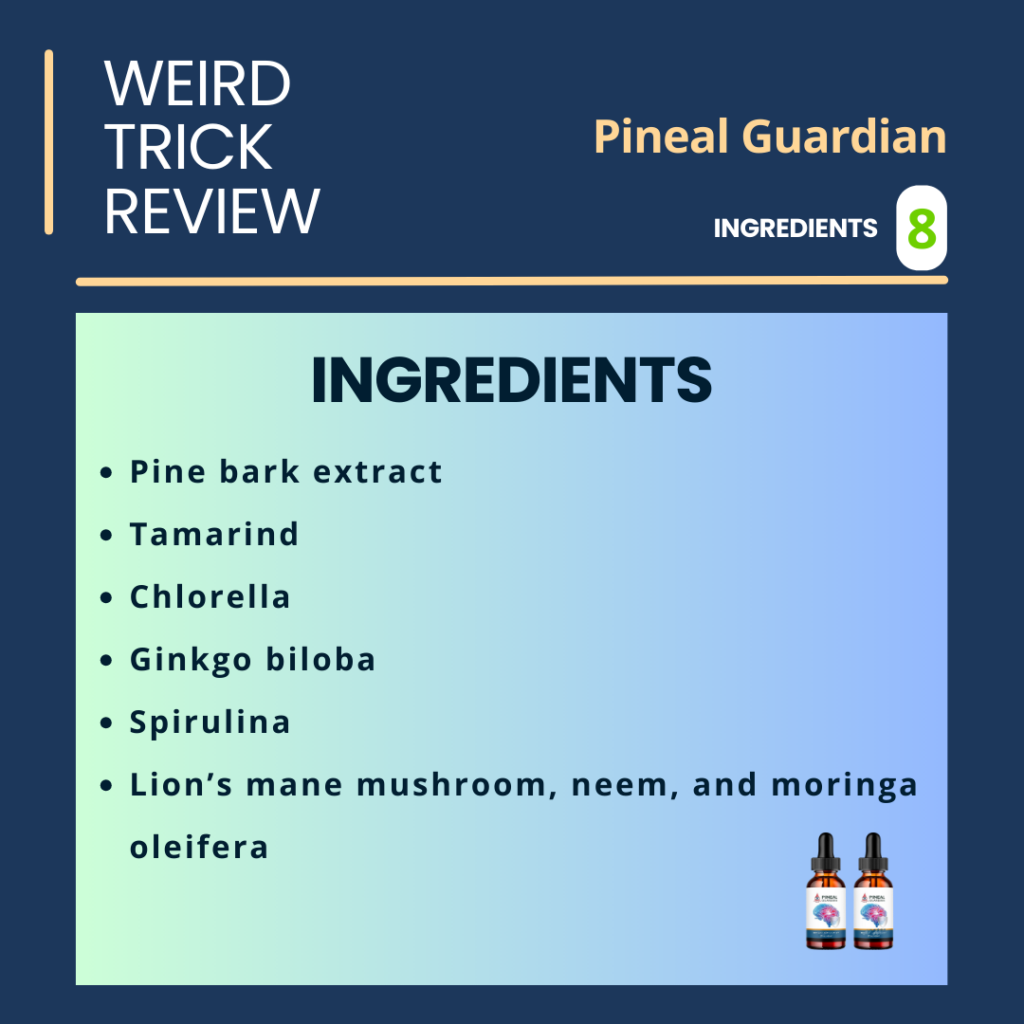
Each drop of Pineal Guardian’s liquid formula contains a blend of pine bark extract, tamarind, chlorella, gingko biloba, spirulina, and other active ingredients.
Some of the ingredients have a long history of use in traditional Chinese medicine. Lion’s mane mushroom, for example, is popular among TCM practitioners for its effects on the brain.
Here’s how the active ingredients in Pineal Guardian work to promote brain function – and what science says about each ingredient:
Pine Bark Extract: Pine bark extract, also known as Pycnogenol, comes from French maritime pine bark. The extract was historically used to promote energy and brain health. Today, Pycnogenol is found in everything from anti-aging serums to brain health supplements. In Pineal Guardian pine bark extract could promote cognitive effects, attention, and mental performance via its natural antioxidant properties, according to a 2009 study.
Tamarind: Tamarind exhibits neuroprotective effects via its polyphenols and flavonoids, both of which have antioxidant properties. There are few major studies linking tamarind to brain health in humans, although some studies show the plant has antidiabetic effects because of the natural antioxidants within.
Chlorella: Chlorella may impact cognitive function, according to the results of some animal trials, by helping with oxidative stress (i.e. inflammation). Chlorella is packed with natural antioxidants and micronutrients linked to cognitive and physical health.
Ginkgo Biloba: Popular in traditional Chinese medicine, gingko biloba has been used over the centuries for everything from cognition to sexual function. In Pineal Guardian, gingko biloba could promote brain function, memory, and overall cognition. One study, in fact, found gingko biloba could promote cognitive function and delay sypmtoms of dementia – although other studies show mixed results.
Spirulina: Spirulina is used by NASA as a supplement for astronauts, helping to boost micronutrient intake in space. Today, some supplements – including green superfood supplements and brain formulas – contain spirulina to promote overall health. One study found spirulina helped with oxidative stress and cholesterol in a group of HIV-infected patients. Other studies connect spirulina to antioxidant and anti-inflammatory properties, which could help with neuroprotection and cognitive function.
Lion’s Mane Mushroom: Lion’s mane mushroom, like gingko biloba, is a natural ingredient with a long history of use in traditional Chinese medicine. Formally known as Hericium erinaceus, lion’s mane mushroom has been linked to neurogenesis (via nerve growth factor stimulation), memory, and overall brain function in animals.
Neem: Neem, or Azadirachta indica, could promote antioxidant effects to protect against neurotoxicity, according to the results of some animal trials.
Moringa Oleifera: Moringa oliefera could help with memory and oxidative stress with its natural neuroprotective compounds, according to some trials. The leaves of moringa oleifera have been used in traditional medicine for centuries to support physical and cognitive health.
Trick Factor
Pineal gland supplements can get messy with the tricks.
Some claim to help you get rich quick by changing your connection with the universe. Others claim to solve all of life’s problems by affecting luck.
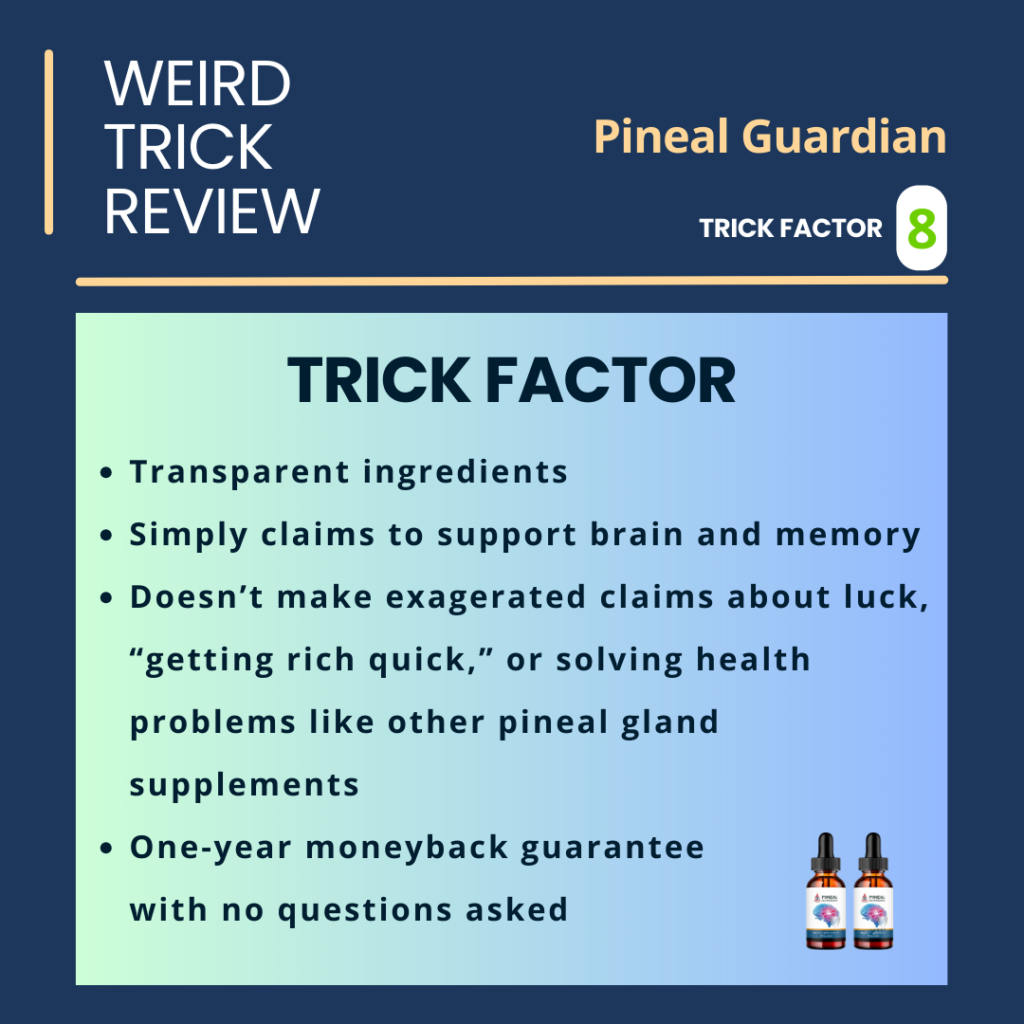
Pineal Guardian, fortunately, avoids these pitfalls and takes a more honest approach: the supplement simply claims to support brain function and memory – two reasonable claims based on the ingredients listed above.
In a supplement industry crowded with inauthentic pineal gland supplements, Pineal Guardian is surprisingly honest about its effects.
Pricing

At $69 per bottle, Pineal Guardian isn’t cheap. You can probably find the individual ingredients at higher doses and cheaper prices online, mixing them together yourself at home.
However, you’re paying for the convenience of Pineal Guardian. And, if buying in bulk, the supplement can support brain function for months without breaking the bank.
Pineal Guardian: Overall Rating
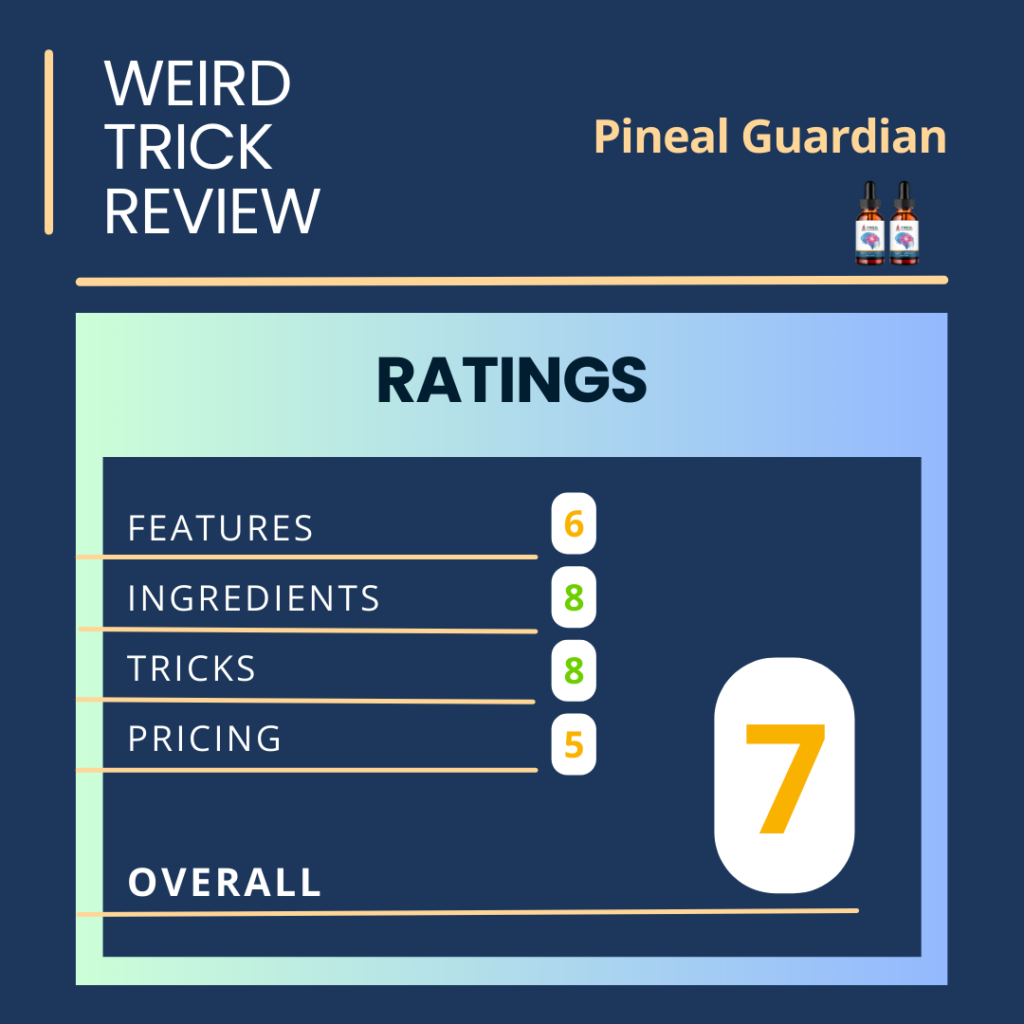
We would have liked Pineal Guardian more if it was called “Brain Guardian” or something. It’s a standard nootropic supplement featuring a blend of concentrated plant extracts linked to cognition, memory, and focus.
There’s no evidence the ingredients in Pineal Guardian affect the pineal gland or “third eye.” However, because the supplement targets the brain, it could feel like you’re experiencing a change in the pineal gland.
If your goal is to support brain function and memory, does it really matter whether you’re targeting the pineal gland or another part of your brain?
References
Sutalangka, C., & Wattanathorn, J. (2012). Neuroprotective and cognitive-enhancing effects of Moringa oleifera Lam. leaves extract against memory impairment, oxidative stress, and neuroinflammation in animal model of age-related dementia. Oxidative Medicine and Cellular Longevity, 2012, 1–9. https://doi.org/10.1155/2012/381428
Chattopadhyay, R. R. (2004). Possible mechanism of hepatoprotective activity of Azadirachta indica leaf extract: Part II. Journal of Ethnopharmacology, 89(2-3), 217–219. https://doi.org/10.1016/j.jep.2003.09.041
Mori, K., et al. (2009). Stimulating effects of Hericium erinaceus on nerve growth factor (NGF) synthesis by human astrocytoma cells. Biomedical Research, 30(1), 1–7. https://doi.org/10.2220/biomedres.30.1
Mujica, V., et al. (2016). Effects of Spirulina on oxidative stress and lipid profile in HIV-infected patients: A randomized double-blind placebo-controlled trial. Clinical Nutrition, 35(1), 48–54. https://doi.org/10.1016/j.clnu.2015.01.010
Mahadevan, S., & Park, Y. (2008). Multifaceted therapeutic benefits of Ginkgo biloba L.: Chemistry, efficacy, safety, and uses. Journal of Food Science, 73(1), R14–R19. https://doi.org/10.1111/j.1750-3841.2007.00645.x
Kawakami, K., et al. (2009). Preventive effects of Chlorella on cognitive decline in age-dependent dementia model mice. Neuroscience Letters, 464(3), 193–198. https://pubmed.ncbi.nlm.nih.gov/19699777/
Sabu, M. C., & Kuttan, R. (2002). Anti-diabetic activity of medicinal plants and its relationship with their antioxidant property. Journal of Ethnopharmacology, 81(2), 155–160. https://doi.org/10.1016/S0378-8741(02)00034-1
Ghosh, D., & Scheepens, A. (2009). Vascular action of polyphenols. Molecular Nutrition & Food Research, 53(3), 322–331. https://doi.org/10.1002/mnfr.200800182
Leave a Reply