
PrimeBiome gummies are doctor-endorsed gummies designed to promote skin health and gut health using natural ingredients.
Designed to be easy to chew and made with natural flavors and colors, PrimeBiome gummies could even help promote healthy weight, according to the label.
How do PrimeBiome gummies work? Can small gummies really help with skin, digestion, and weight? Let’s find out.
Features
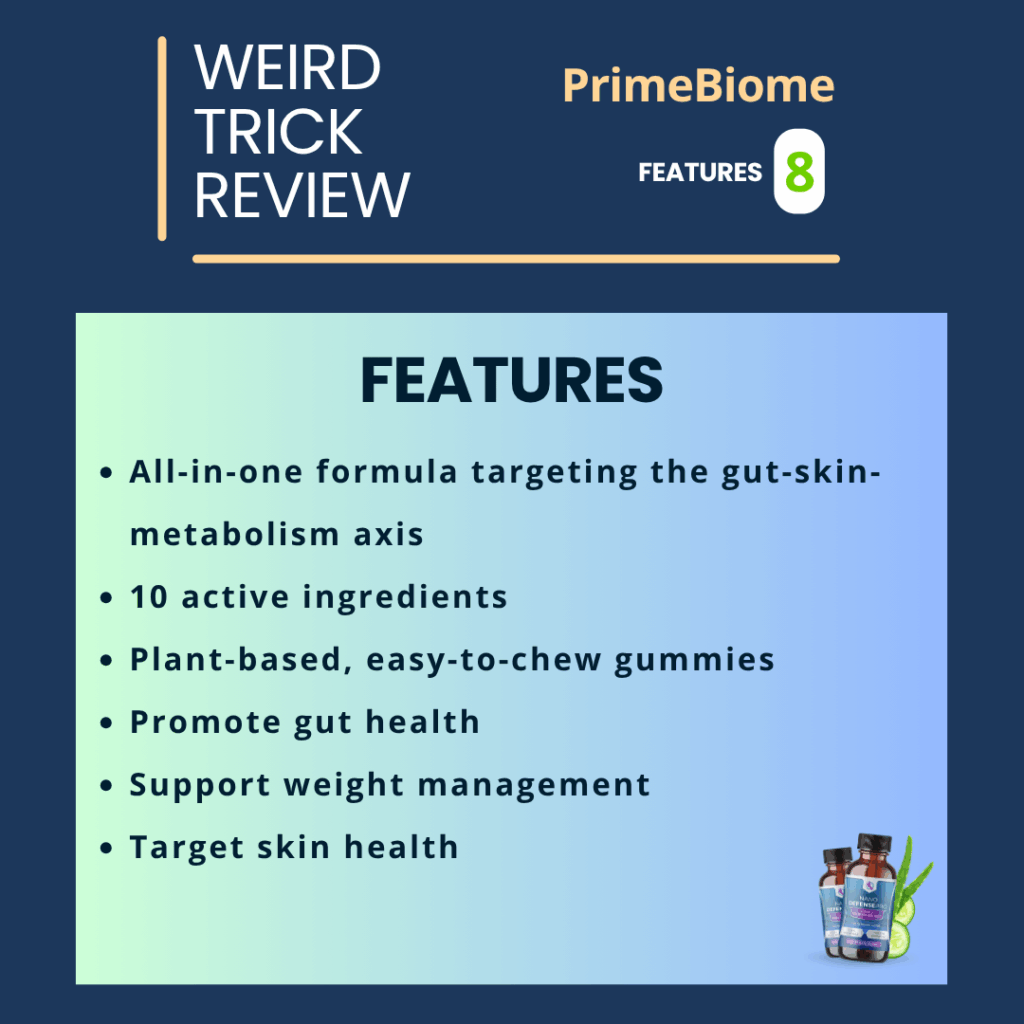
Some supplements target a single core benefit. Others target three massive areas of health. PrimeBiome is in the latter category.
By taking the plant-based PrimeBiome gummies daily, you can purportedly support skin renewal, gut function, and weight control using 10 active ingredients.
Those 10 active ingredients work by targeting the gut-skin-metabolism axis. PrimeBiome is based on the idea that your gut, skin, and metabolism are all closely connected.
That may sound like a marketing gimmick, but it’s true: your body is a series of interconnected systems. The health of your gut impacts the health of your skin and your metabolism – just like the number of steps you take per day affects brain health.
Key features include:
- All-in-one formula targeting the gut-skin-metabolism axis
- 10 active ingredients
- Plant-based, easy-to-chew gummies
- Promote gut health
- Support weight management
- Target skin health
Ingredients
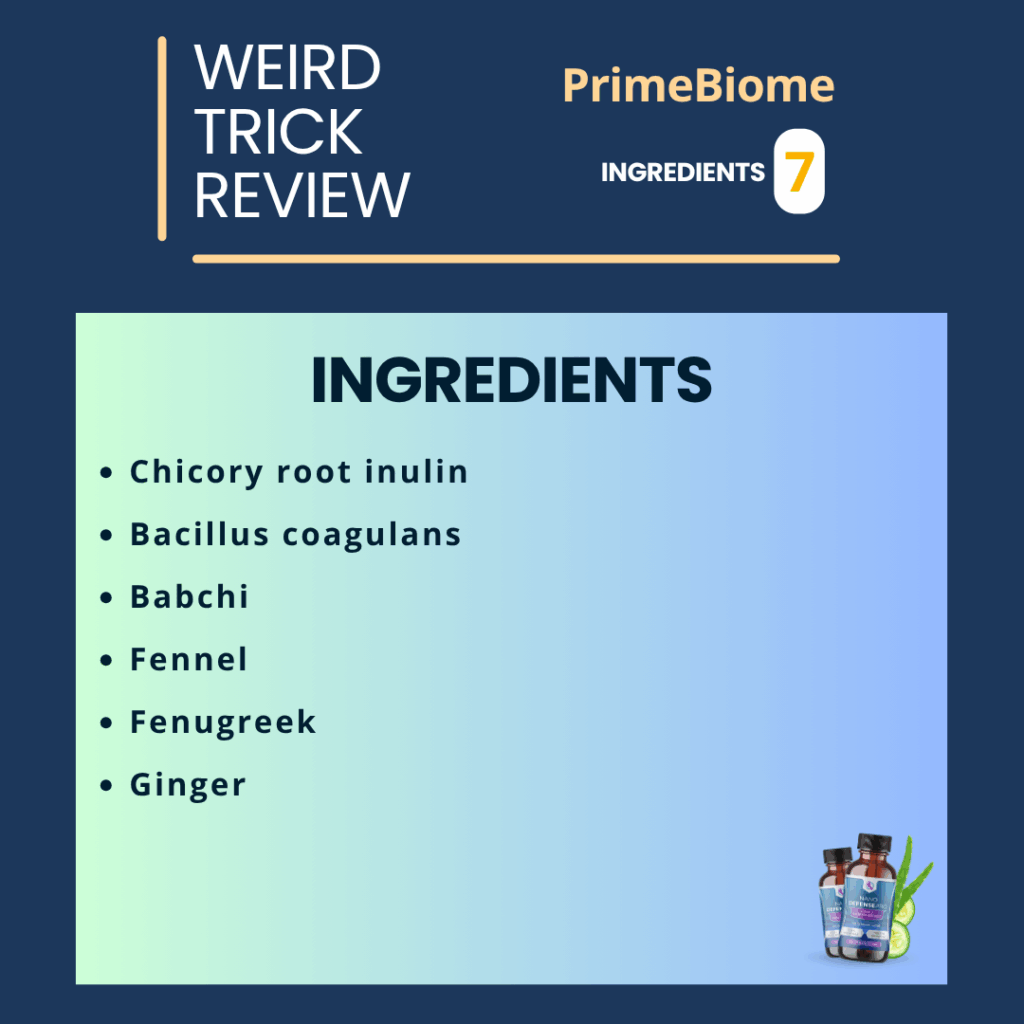
To achieve these diverse effects, PrimeBiome gummies contain a similarly diverse blend of active ingredients.
Each gummy contains 10 active ingredients – from probiotic strains to plant extracts – to promote skin, weight, and gut health.
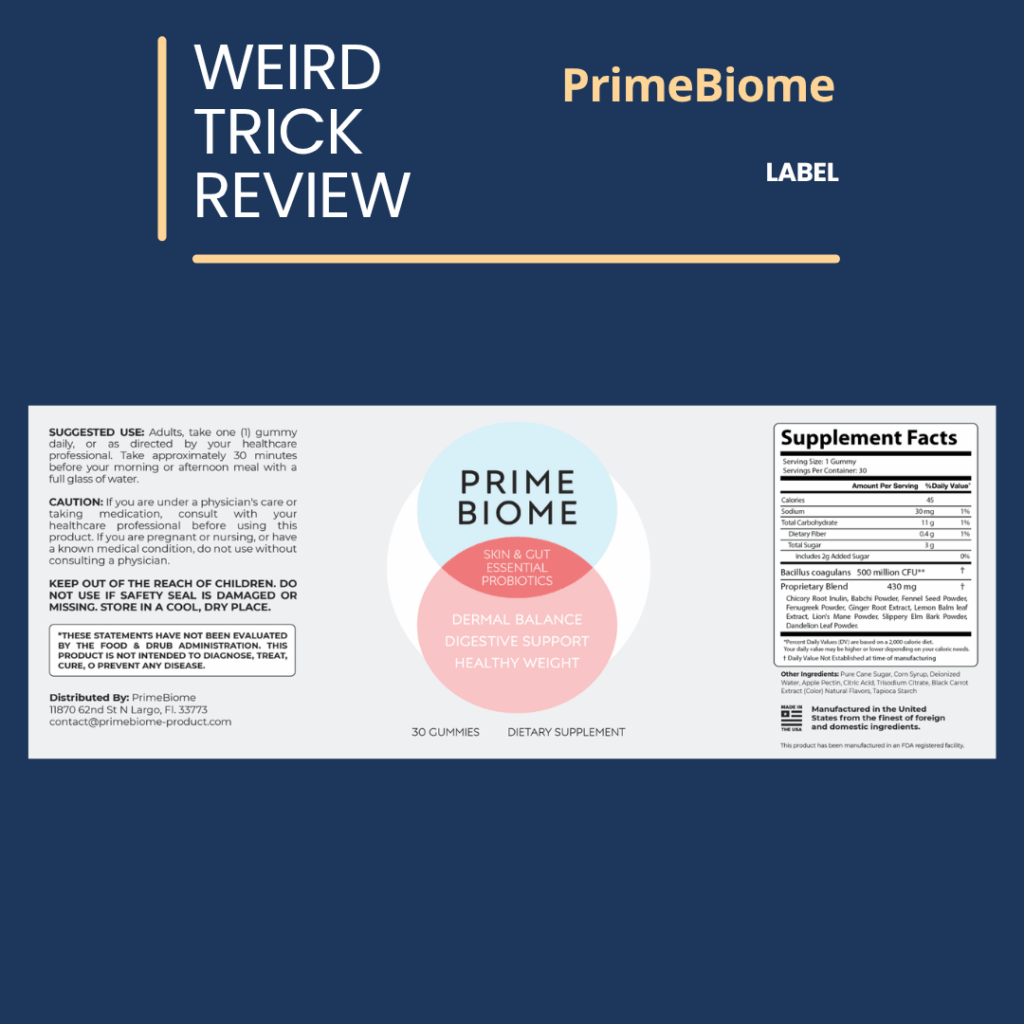
The largest ingredient in PrimeBiome appears to be chicory root inulin, as it’s the first listed ingredient in the 430mg proprietary blend. Typically, the largest ingredient is listed first in proprietary blends. Babchi, fennel, and fenugreek are the next three largest ingredients.
Although it’s not the largest ingredient by weight, Bacillus coagulans (a probiotic strain) is a large ingredient overall. There are 500 million colony forming units (CFUs) of B. coagulans in each gummy. If the probiotic bacteria in your gut are imbalanced, then B. coagulans could help promote balance, helping send effects along the gut-brain-metabolism-everything-else-in-your-body axis (at least that’s the idea).
Here are all of the active ingredients in PrimeBiome gummies and how they could work:
Bacillus Coagulans: Bacillus coagulans is a popular probiotic strain found in everything from yogurts to gut supplements. Some studies show B. coagulans can promote gut microbiota balance and help support weight loss.
Chicory Root Inulin: Inulin, from chicory root, is the largest ingredient in PrimeBiome by weight and the first listed ingredient in the gummy’s proprietary blend. Inulin is a type of prebiotic fiber, which means it feeds gut bacteria. Your gut bacteria need prebiotic fiber to survive, thrive, and multiply. Some studies have linked inulin to better bowel movements. Others have connected inulin to blood sugar balance and weight control.
Babchi Powder: Babchi is one of the more unique ingredients in PrimeBiome. Rarely found in supplements, babchi (also known as bakuchi and formally known as Psoralea corylifolia) contains an active ingredient called bakuchiol, which is a plant-based retinol used in some skincare products. Typically, the plant is used topically, or applied directly to the skin, to promote collagen production. In one recent trial, for example, 44 volunteers applied babchi or retinol cream to their face for 12 weeks and experienced a significant decrease in wrinkle surface area and hyperpigmentation. However, some traditional Chinese and Indian medicine practitioners recommend oral use to promote skin health.
Fennel Seed Powder: Fennel is popular for gut health, and some take fennel daily for that reason. In a 2022 study, researchers found fennel seed extract helped with STAT signaling and intestinal barrier function. Other studies suggest fennel is packed with natural antioxidants to help support healthy inflammation. Because inflammation tends to be closely connected to IBS, these natural antioxidants could support overall calmness in the gut.
Fenugreek Powder: Fenugreekis found in a growing number of weight loss supplements. Surprisingly, studies suggest it works: fenugreek is high in soluble fiber and could help to promote appetite control and satiety. Some studies find people genuinely consume fewer calories when adding fenugreek to their diet.
Ginger Root Extract: Ginger is one of the best-known ingredients in PrimeBiome gummies. Some take ginger daily for energy. Others take ginger for general immune function and overall health. Ginger has been linked to all three core effects of PrimeBiome gummies: the effects on skin, gut, and weight. That’s because ginger contains a natural antioxidant called gingerol that could help with all three of these areas. A 2022 review found ginger (and gingerol) could promote healthy aging based on a meta-analysis covering dozens of trials on older adults.
Lemon Balm Leaf Extract: Lemon balm has a long history of use in traditional medicine practices worldwide for its effects on gut health and calmness. Today, it’s found in some gut health supplements for similar reasons. Studies suggest lemon balm could help with indigestion and spasms, with some studies specifically connecting the plant to spasmolytic effects in gut smooth muscle.
Lion’s Mane Powder: Lion’s mane mushroom is typically found in nootropics, or brain health supplements. However, the gut is closely connected to the brain, and PrimeBiome is built to target the gut-brain-skin-weight axis (or something like that). One recent clinical trial analyzed the effects of lion’s mane on brain health and neurotrophic factors in a group of humans.
Slippery Elm Bark Powder: Slippery elm bark extract comes from the mucilage-rich inner bark. As the name suggests, the extract could make your gut “slippery,” making bowel movements easier. Some take slippery elm regularly to soothe gut mucosa and target symptoms of IBS.
Dandelion: Oddly, dandelion is listed on the official website but not on the PrimeBiome gummy label. Dandelion tea was historically used for gut health and appetite control. Today, we know dandelion works because it contains flavonoids that inhibit pancreatic lipase while reducing fab absorption, which could help promote weight loss.
Other (Inactive) Ingredients: If you jam all the active ingredients above together, it doesn’t create a gummy. That’s why you need other (inactive) ingredients to hold them together, keep them stable, and make them taste good. PrimeBiome, surprisingly, uses natural colors (like black carrot extract) and natural flavors – not the artificial flavors and colors used by other gummies in this space. The full list of inactive ingredients includes pure cane sugar, corn syrup, deionized water, apple pectin, citric acid, trisodium citrate, black carrot extract (for color), natural flavors, and tapioca starch.
Trick Factor
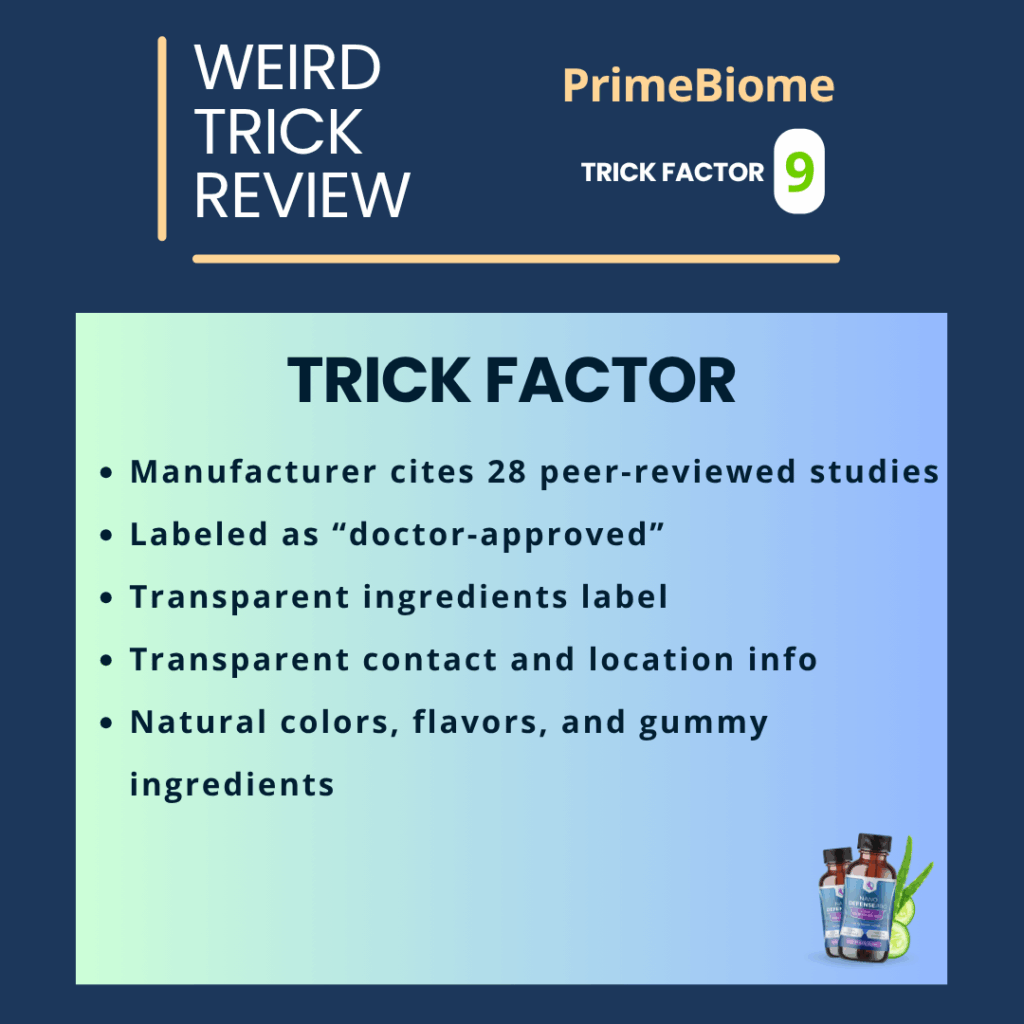
The PrimeBiome sales page looks like the sales page of most other Clickbank supplements sold online today: it’s a basic overview of features without over-promising inaccurate health benefits.
Sure, there may be some shady video sales letters (VSLs) out there, but we haven’t seen them. Based on the PrimeBiome webpage we see at GetPrimeBiome.com, the supplement seems to legitimately offer science-backed ingredients to target different areas of health and wellness.
Better yet, the manufacturer cites 28 peer-reviewed studies on the official references page. The manufacturer provides contact information and a full, transparent “Supplement Facts” label upfront. We even know the Largo, Florida-based address of the PrimeBiome team.
To be clear, PrimeBiome is still an overpriced gummy supplement that overpromises its effects on your skin, gut, and weight; however, there are plenty of shadier supplements in this competitive corner of the space.
Pricing
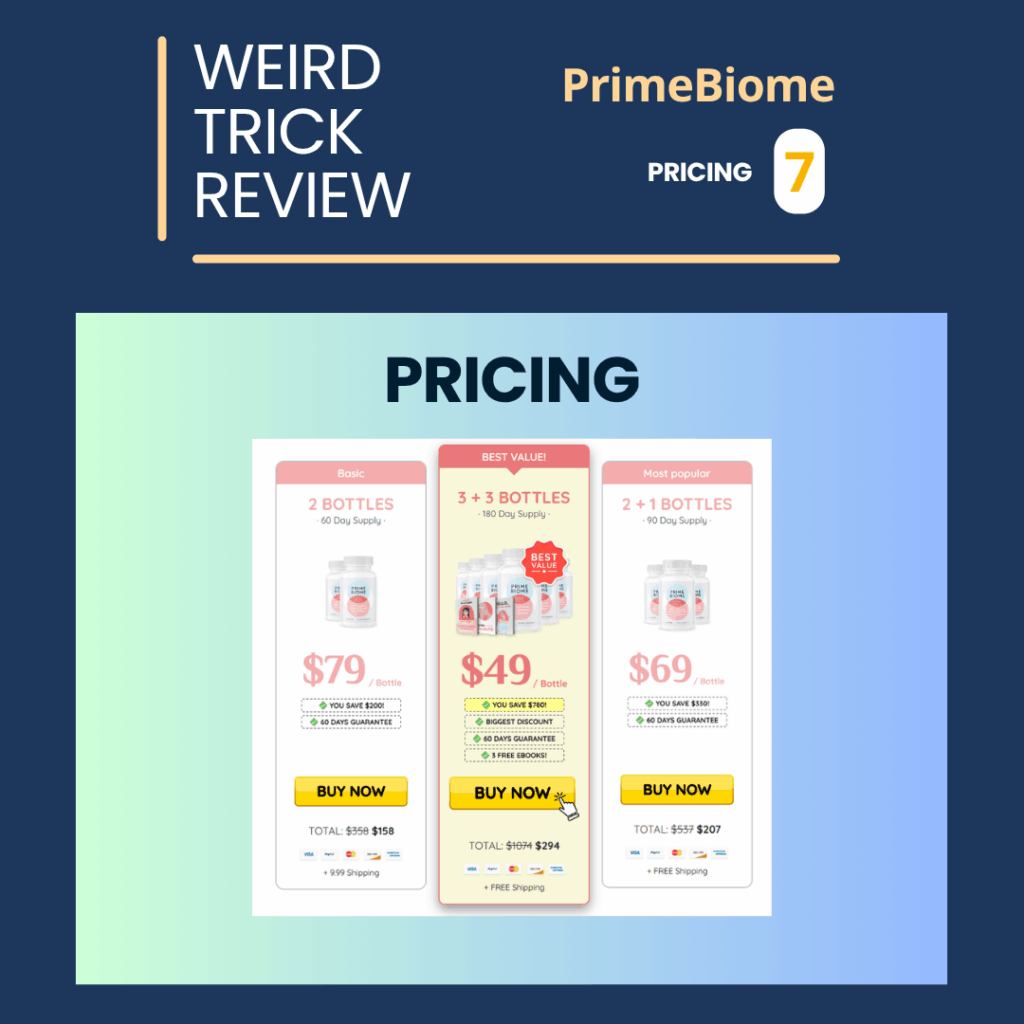
At $79 per bottle, PrimeBiome is more expensive than an ordinary gummy supplement – but within range of other gummies sold online today.
All purchases come with a 60-day moneyback guarantee. Plus, you get 6 free eBooks if you buy 6 bottles of PrimeBiome.
Each bottle of PrimeBiome contains a 30-day supply, or 30 gummies (30 servings).
1 Bottle: $79 + $9.99 Shipping
3 Bottles: $207 ($69 Per Bottle) + Free Shipping
6 Bottles: $294 ($49 Per Bottle) + Free Shipping + 3 Free eBooks
The free bonus eBooks include PDFs covering various beauty regimens, including:
- Free Bonus eBook #1: See You Never, Cellulite: Normally priced at $55 (yeah, okay), this eBook explains how to “erase cellulite fast, naturally, and with no effort.” Typically, cellulite is an ordinary part of aging and not a big deal. However, the author claims to have identified a series of tips to help you “get rid of the orange-peel skin.”
- Free Bonus eBook #2: Hello, Dazzling Hair: Another eBook normally priced at $54 (there’s no way), Hello, Dazzling Hair features practical at-home haircare tips and tricks.
- Free Bonus eBook #3: White in a Flash: Discover the Secrets to a Brighter, Healthier Smile: You could just go to the dentist. Or, you could follow at-home oral remedies to rapidly brighten teeth, fix sensitive teeth, and brush teeth better, among other strategies. It’s yet another eBook normally valued at $54 (again, we’re skeptical).
PrimeBiome Gummies: Overall Rating
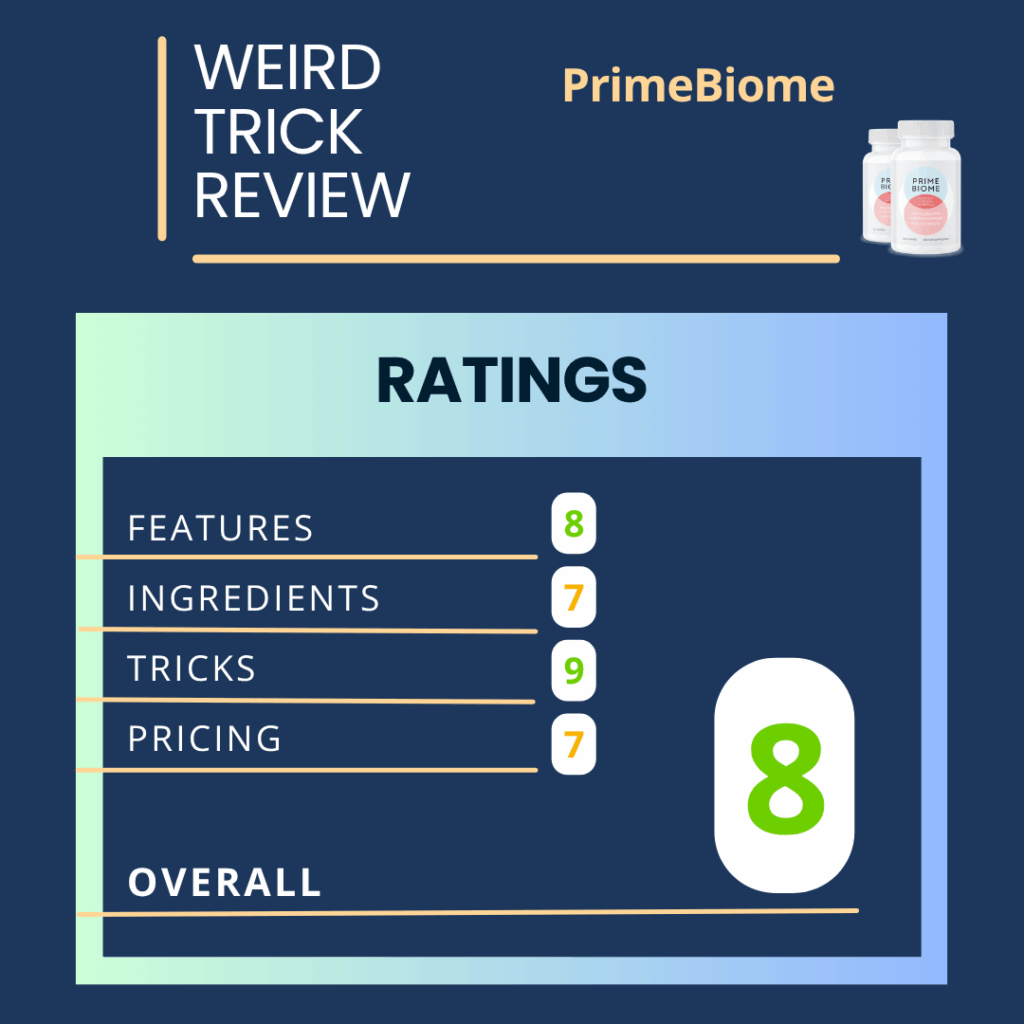
PrimeBiome gummies have surged in popularity in 2025.
Some take the gummies for weight loss. Others take them for gut health, brain health, skin health, or overall balance.
Like other gummies, PrimeBiome gummies don’t contain a significant dose of any single active ingredient. And, because they’re in gummy form, your body may struggle to digest meaningful doses of those ingredients.
Nevertheless, the 10 ingredients within PrimeBiome are backed by science suggesting they can impact your gut-skin-weight axis. The makers of PrimeBiome also hint about the supplement being doctor-approved – something we don’t always see in this shady corner of the supplement industry.
Don’t expect PrimeBiome gummies to transform your life overnight; however, they could mildly support digestive health and weight management in some adults.
References
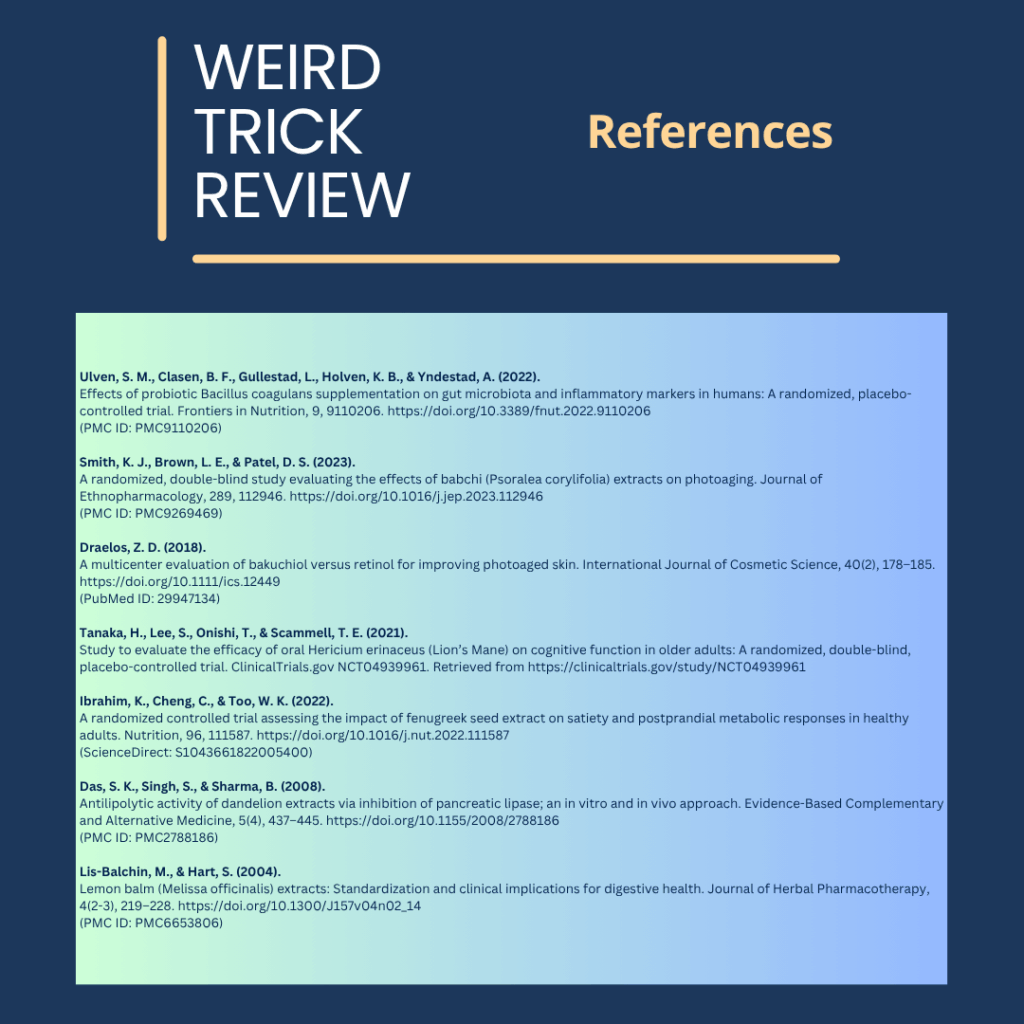
Ulven, S. M., Clasen, B. F., Gullestad, L., Holven, K. B., & Yndestad, A. (2022).
Effects of probiotic Bacillus coagulans supplementation on gut microbiota and inflammatory markers in humans: A randomized, placebo-controlled trial. Frontiers in Nutrition, 9, 9110206. https://doi.org/10.3389/fnut.2022.9110206
(PMC ID: PMC9110206)
Smith, K. J., Brown, L. E., & Patel, D. S. (2023).
A randomized, double-blind study evaluating the effects of babchi (Psoralea corylifolia) extracts on photoaging. Journal of Ethnopharmacology, 289, 112946. https://doi.org/10.1016/j.jep.2023.112946
(PMC ID: PMC9269469)
Draelos, Z. D. (2018).
A multicenter evaluation of bakuchiol versus retinol for improving photoaged skin. International Journal of Cosmetic Science, 40(2), 178–185. https://doi.org/10.1111/ics.12449
(PubMed ID: 29947134)
Tanaka, H., Lee, S., Onishi, T., & Scammell, T. E. (2021).
Study to evaluate the efficacy of oral Hericium erinaceus (Lion’s Mane) on cognitive function in older adults: A randomized, double-blind, placebo-controlled trial. ClinicalTrials.gov NCT04939961. Retrieved from https://clinicaltrials.gov/study/NCT04939961
Ibrahim, K., Cheng, C., & Too, W. K. (2022).
A randomized controlled trial assessing the impact of fenugreek seed extract on satiety and postprandial metabolic responses in healthy adults. Nutrition, 96, 111587. https://doi.org/10.1016/j.nut.2022.111587
(ScienceDirect: S1043661822005400)
Das, S. K., Singh, S., & Sharma, B. (2008).
Antilipolytic activity of dandelion extracts via inhibition of pancreatic lipase; an in vitro and in vivo approach. Evidence-Based Complementary and Alternative Medicine, 5(4), 437–445. https://doi.org/10.1155/2008/2788186
(PMC ID: PMC2788186)
Lis-Balchin, M., & Hart, S. (2004).
Lemon balm (Melissa officinalis) extracts: Standardization and clinical implications for digestive health. Journal of Herbal Pharmacotherapy, 4(2-3), 219–228. https://doi.org/10.1300/J157v04n02_14
(PMC ID: PMC6653806)
Leave a Reply